Drug Test Cut-Off Levels & Lab Accuracy: What Actually Fails You in 2026
How labs detect THC, dilution, and adulterants — and the exact ng/mL numbers that determine whether you pass or fail.
If you’re staring down a drug test, the only number that matters is 50 ng/mL. That’s the federal screening cut-off for THC in urine — the line between “negative” and “non-negative.” Stay below it and you pass. Cross it and your sample heads to confirmation testing, where a different (and much stricter) number takes over.
But cut-offs are only half the story. Modern labs run specimen validity tests on every sample — checking creatinine, pH, specific gravity, and oxidants — to catch dilution, substitution, and adulterants like nitrite or glutaraldehyde. This guide walks through every threshold the lab actually uses, how the equipment works, and why “below the cut-off” is the only path that holds up under SAMHSA-level scrutiny.
The numbers that decide pass or fail
- THC screening (urine): 50 ng/mL — federal SAMHSA threshold
- THC confirmation (GC-MS / LC-MS): 15 ng/mL — the second, stricter test
- Creatinine flag (dilution): below 20 mg/dL = “dilute” result
- Specific gravity flag: below 1.0030 = invalid sample
- pH range: must be between 4.5 and 9.0 (anything outside = adulterated)
- Oxidant test: detects nitrite, chromate, peroxide, glutaraldehyde — instant fail
Bottom line: You can’t out-cheat the lab. The only reliable strategy is being genuinely below 50 ng/mL on test day — which means actually clearing THC from your system, not masking it. Use the free detox calculator to estimate your timeline.
Below, we break down each of these numbers — what they mean, where they come from, and how SAMHSA-certified labs actually catch the millions of people who try to fake their way through every year.
What Is a Drug Test Cut-Off Level?
A cut-off level is the concentration of a drug (or its metabolite) in a sample that determines whether the result is reported as positive or negative. Anything at or above the threshold triggers a positive flag. Anything below it is reported as negative — even if the drug is technically still present in trace amounts.
Cut-offs exist for one main reason: to filter out passive exposure, contamination, and background noise so labs aren’t reporting false positives on people who walked through a smoky room three weeks ago.
Screening vs. Confirmation: Two Tests, Two Numbers
Every regulated drug test runs in two stages, each with its own cut-off:
Stage 1 — Initial Screen (Immunoassay): Fast, cheap, runs on every sample. For THC the cut-off is 50 ng/mL. This stage produces a “presumptive positive” — it’s not the final answer, just a flag.
Stage 2 — Confirmation (GC-MS or LC-MS/MS): Only runs if Stage 1 flags. Far more sensitive and specific. THC confirmation cut-off drops to 15 ng/mL — and identifies the exact metabolite (THC-COOH) with near-zero false positives.
If your sample passes Stage 1 (under 50 ng/mL), it’s reported negative and never sees Stage 2. If it fails Stage 1 but somehow passes Stage 2 (between 15 and 50 ng/mL after re-analysis), the lab still reports it negative — confirmation is the final word.
This two-stage system is mandated by SAMHSA for all federally regulated tests and is followed voluntarily by nearly every major private lab (Quest Diagnostics, LabCorp, Clinical Reference Laboratory) because it’s the legal-defense gold standard.
The 2026 Drug Test Cut-Off Cheat Sheet
Below are the current SAMHSA-mandated cut-offs for federally regulated workplace testing. Private employers can set lower thresholds (some test at 20 ng/mL THC for hair) but rarely set them higher. Numbers reflect the HHS Mandatory Guidelines effective October 2024, still in force in 2026.
Urine Cut-Offs (most common)
| Substance | Screen (ng/mL) | Confirmation (ng/mL) |
|---|---|---|
| THC (marijuana) | 50 | 15 (THC-COOH) |
| Cocaine | 150 | 100 (benzoylecgonine) |
| Opiates (codeine, morphine) | 2,000 | 2,000 |
| 6-AM (heroin marker) | 10 | 10 |
| Amphetamines / Meth | 500 | 250 |
| MDMA | 500 | 250 |
| PCP | 25 | 25 |
| Oxycodone / Oxymorphone | 100 | 100 |
Other Specimen Types (THC focus)
| Specimen | Screen Cut-Off | Confirmation Cut-Off | Detection Window |
|---|---|---|---|
| Urine | 50 ng/mL | 15 ng/mL | 3–30+ days |
| Oral Fluid (saliva) | 4 ng/mL | 2 ng/mL | 24–72 hours |
| Hair | 1 pg/mg | 0.05 pg/mg | up to 90 days |
| Blood | 1–5 ng/mL (active THC) | 1 ng/mL | 2–24 hours (active) |
Source: SAMHSA Mandatory Guidelines for Federal Workplace Drug Testing Programs (Urine, Oral Fluid, Hair); 49 CFR Part 40 (DOT).
How Labs Actually Test Your Sample
Understanding the equipment matters because each stage has different blind spots — and different ways to flag a fake. Here’s the actual flow your urine takes from collection cup to final report at a SAMHSA-certified lab.
The 4-Step Lab Workflow
Before any drug testing happens, the sample is checked for temperature (90–100°F within 4 minutes), creatinine, specific gravity, pH, and oxidants. If any value is out of range, the sample is flagged “invalid” or “adulterated” — and your test is essentially failed before drug analysis even starts.
An automated analyzer (typically EMIT, CEDIA, or KIMS technology) uses antibodies that bind to drug metabolites. Color change above the cut-off threshold = “presumptive positive.” This stage takes minutes and screens 5–10 drug classes simultaneously.
Only flagged samples advance. Gas Chromatography-Mass Spectrometry (or its more modern cousin LC-MS/MS) separates molecules by weight and identifies them by their unique mass-to-charge fingerprint. False-positive rate is essentially zero — this stage can distinguish prescription Adderall from street meth, codeine from heroin, hemp CBD from marijuana THC.
A Medical Review Officer (a licensed physician) reviews every non-negative result before it reaches your employer. The MRO contacts you to verify legitimate prescriptions. This is your only real chance to explain a positive — and it only works for valid Rx, not weed.
Total turnaround for a clean negative: usually 24 hours. For a sample that needs confirmation: 48–72 hours. Adulterated or invalid samples can stretch to a week as the lab runs additional integrity tests.
Specimen Validity Tests: What Gets You Flagged
Every accredited lab runs a battery of integrity tests on each sample before drug analysis. These tests exist specifically to catch the four most common cheating tactics: dilution (drinking gallons of water), substitution (synthetic urine), adulteration (chemicals in the cup), and temperature manipulation (smuggled or microwaved samples).
The Five Validity Markers
| Marker | Normal Range | What Triggers a Flag |
|---|---|---|
| Creatinine | ≥ 20 mg/dL | Below 20 = “dilute”; below 2 = “substituted” |
| Specific Gravity | 1.0030 – 1.0300 | Below 1.0030 = dilute; below 1.0010 = substituted |
| pH | 4.5 – 9.0 | Outside range = adulterated |
| Oxidants | None detectable | Nitrite, chromate, peroxide, glutaraldehyde, halogens = adulterated |
| Temperature | 90°F – 100°F | Outside range within 4 min of voiding = collection retest |
⚠️ Why “dilute negative” is almost as bad as failing
A “dilute negative” result tells your employer you tried to flush — even if no THC was detected. Most employers treat dilute negatives as a failed test or require an immediate retest under direct observation. Drinking 2 gallons of water before your test isn’t strategy. It’s a flag.
What Modern Labs Catch That They Didn’t 10 Years Ago
- Synthetic urine biomarkers. Quest’s “Quick Fix detection panel” tests for biocide preservatives and uric acid ratios that don’t appear in human urine.
- Adulterant-specific assays. The Intect 7 strip detects pyridinium chlorochromate (Urine Luck), glutaraldehyde (UrinAid), and PCC within seconds.
- DNA confirmation. For high-stakes tests (DOT post-accident, federal employment), labs can run human DNA tests to confirm the sample came from the donor.
- Observed collection. Any flagged sample triggers a re-collection under direct observation — meaning a same-sex collector watches you produce the sample.
What “Diluted” or “Invalid” Really Means for You
A lot of people think a “dilute negative” is a win. It isn’t. Here’s what each non-standard result actually means when it lands on your employer’s desk.
| Lab Result | What It Means | Employer Action |
|---|---|---|
| Negative | Below cut-off, valid sample | You pass. Onboarding proceeds. |
| Negative-Dilute | No drugs found, but creatinine/SG too low | Most order an immediate retest. Some treat as fail. |
| Positive | Confirmed drug above cut-off | Job offer rescinded or termination. |
| Positive-Dilute | Drug present + dilution attempt | Treated as a hard fail. Often unappealable. |
| Adulterated | Foreign chemicals detected | Treated as positive. Often grounds for “for cause” termination. |
| Substituted | Sample isn’t human urine | Same as positive. May trigger DOT-wide reporting. |
| Invalid | Lab can’t determine validity | Re-collection under direct observation. |
| Refusal to Test | No sample provided in time, walked out, or shy bladder > 3hrs | Treated identically to a positive result. |
In DOT-regulated industries (trucking, aviation, rail, pipeline), an adulterated or substituted result triggers a federal record that follows you for years. Even in private employment, most states allow employers to share dilute and adulterated results with future employers in background checks.
Why Being Under the Cut-Off Is the Only Winning Move
Add it all up — the two-stage testing, the validity panel, the synthetic urine detectors, the temperature checks, the observed re-collections — and one truth emerges: the only sample that consistently passes is a real one with THC genuinely below 50 ng/mL.
Same-day “detox drinks” that promise to mask THC are essentially water + creatine + B vitamins designed to dilute your urine within the legal-looking range. They work occasionally, but every flagged dilute result you read about online came from someone who trusted one of them. Synthetic urine is detected at major labs. Adulterants are screened for by name.
The path that actually holds up: give your body enough time to clear THC metabolites from fat tissue, support the liver and kidneys with herbs that genuinely accelerate phase 1 and phase 2 detox pathways, and walk into the collection room with a real sample that reads negative because it is negative.
Ultra THC Detox — 7-Day Herbal Cleanse
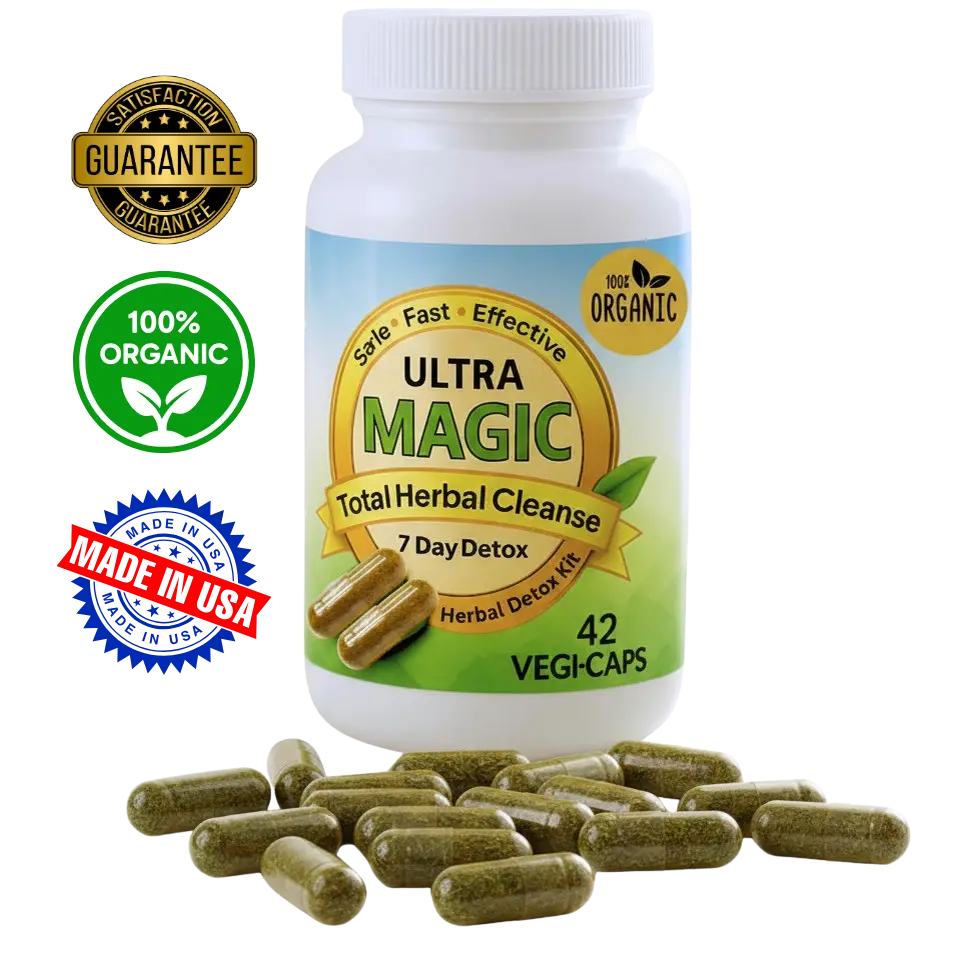
A 7-day herbal protocol built around seven liver- and kidney-supporting botanicals: Burdock, Dandelion, Rhubarb, Goldenseal, Sheep Sorrel, Cat’s Claw, and Pau D’Arco. Designed to accelerate the body’s natural metabolite clearance — not mask it.
7 herbal extracts
No synthetic masking agents
Made in USA
Shop Ultra THC Detox — $57.95 →
Not sure how long you need? Use the free detox calculator to estimate your clean date.
DOT, Federal, vs. Private Employer: The Cut-Offs Aren’t Always the Same
SAMHSA sets the floor for federally regulated testing. But private employers, state-run programs, and certain industries can — and often do — set stricter thresholds. Here’s how the three regulatory worlds differ.
Federal / DOT (49 CFR Part 40)
- Mandatory two-stage testing (immunoassay + GC-MS/LC-MS/MS confirmation)
- SAMHSA cut-offs are fixed — employers can’t lower them
- Mandatory MRO review of all non-negative results
- Refusals, adulterations, and substitutions reported to FMCSA Clearinghouse (trucking) for 5 years
- No accommodation for state-legal recreational marijuana — even in CA, CO, NY
Federal Civilian Employment (HHS Mandatory Guidelines)
- Same SAMHSA cut-offs as DOT
- Applies to executive-branch agencies, contractors, and security-clearance positions
- Hair and oral fluid testing now permitted under 2024 revised guidelines
Private Employers (Non-Regulated)
- Can set lower cut-offs than SAMHSA (some healthcare and security employers test THC at 20 ng/mL)
- Not required to use a certified lab — instant cup tests are common
- State law may restrict testing for off-duty marijuana use (CA AB 2188, NJ, NY, CT, NV, MT, RI, WA — check your state)
- Don’t always require MRO review
💡 Quick check before your test
Look up your specific employer’s policy on the Drug Test Policies by Employer guide — covers Amazon, FedEx, UPS, Walmart, Home Depot and 50+ major U.S. employers.
Frequently Asked Questions
Sources & References
All cut-off levels and testing methodology cited on this page come directly from US federal regulatory documents and the two largest national clinical drug testing labs. Every link verified live as of April 2026.
SAMHSA Mandatory Federal Workplace Drug Testing Guidelines
- SAMHSA. Mandatory Guidelines for Federal Workplace Drug Testing Programs — Urine (Federal Register, effective Oct 1, 2017).
- SAMHSA. Mandatory Guidelines for Federal Workplace Drug Testing Programs — Oral Fluid (Federal Register, final 2019, revised 2024).
- SAMHSA. Mandatory Guidelines for Federal Workplace Drug Testing Programs — Hair (Federal Register, effective 2024).
- SAMHSA. Workplace Drug Testing Program Resources.
- SAMHSA. Employer Resources for Workplace Drug Testing.
Federal Transportation & DOT Regulation
- Electronic Code of Federal Regulations. 49 CFR Part 40 — DOT Procedures for Workplace Drug and Alcohol Testing.
- Federal Motor Carrier Safety Administration. FMCSA Drug & Alcohol Clearinghouse.
National Clinical Testing Laboratories
- Quest Diagnostics. Drug Testing Index & Employer Drug Screening Resources.
- LabCorp. Workplace Drug Testing for Employers.
Public Health & Cannabis Research
- National Institute on Drug Abuse. NIDA Marijuana Research Report.
- Centers for Disease Control and Prevention. NIOSH — National Institute for Occupational Safety and Health.
More From Magic Detox
- Free THC Detox Calculator — estimate your clean date based on body fat, frequency & test type
- Magic Detox vs Toxin Rid — honest 2026 head-to-head comparison
- Drug Test Policies by Employer — Amazon, FedEx, UPS, Walmart & 50+ major employers
- Best Detox for a Urine Test
- Complete THC Detox Guide: What Works, What Doesn’t
- Best THC Detox According to Reddit
- Why QCarbo Detox Drink Doesn’t Work
- Does Magic Detox Actually Work? (Real Reviews)