
Updated: July 2026 – Reviewed by Kristen Shea
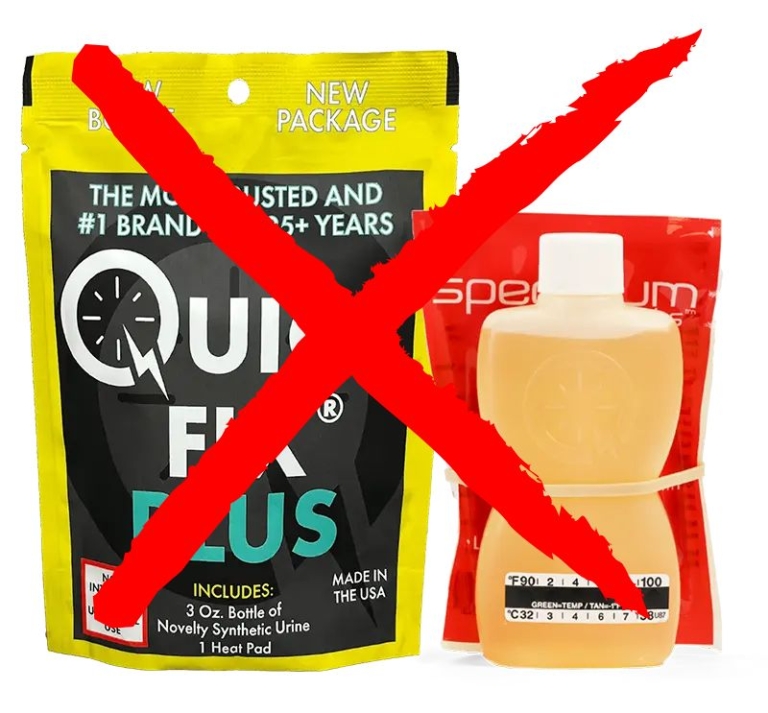
If you’re weighing Quick Fix synthetic urine before an upcoming drug test, read this first. Over the past two years, labs across the U.S. have added new detection layers specifically because synthetic urine products became so widespread. What carried some risk in 2019 carries a very different risk profile in 2026, and the data now backs that up.
Below is a plain-English breakdown of exactly what labs check for, where Quick Fix falls short on each one, and why the consequences of a tampered-specimen finding are often worse than simply testing positive. We’re also going to look at what actually works instead, because there is a real answer that doesn’t involve any of this risk.
⚠️ The Short Version (if you’re short on time)
- Labs run specimen validity tests on every sample before even looking for THC — Quick Fix has to clear those first
- The collector checks temperature within 4 minutes of voiding; hand warmers are not precise enough to guarantee the 90–100°F window
- Substituted-specimen rates in the U.S. workforce surged 633% in 2023 — labs responded by tightening procedures, not relaxing them
- A tampered specimen is reported the same as a refusal to test, which in most programs carries identical or worse consequences than a positive result
- A 7-day herbal cleanse can actually remove THC from your system — no smuggling, no temperature anxiety, no fraud risk
How Do Labs Detect Synthetic Urine?
Most people think the drug test screens for THC. That’s the second thing it does. The first is a specimen validity test (SVT) designed to confirm the sample is consistent with real human urine. Quick Fix has to pass that gate before the lab ever searches for drug metabolites.
Per the SAMHSA 2024 Urine Collection Handbook, a specimen is reported substituted — treated identically to a positive when it meets any of these criteria:
- Creatinine concentration below 2 mg/dL
- Specific gravity below 1.001 or above 1.020
- pH outside the expected physiological range
- Presence of oxidizing agents, surfactants, or other adulterants
A substituted result is reported to the Medical Review Officer (MRO) and in most programs triggers the same outcome as a failed drug test. This step has nothing to do with what substances you may have used — it’s purely about whether the sample could have come from a human body.
Can a Lab Tell Quick Fix Isn’t Real Urine?
Quick Fix is one of the most commonly used synthetic urine products in the country. Its popularity is also its vulnerability. When a lab that processes millions of samples per year sees thousands of specimens with nearly identical creatinine values, identical specific gravity, and the same absence of biological compounds, the pattern becomes statistically obvious.
Real human urine varies constantly — by hydration, diet, time of day, body mass, kidney function, and dozens of metabolic factors. Synthetic urine is engineered to be consistent batch to batch. That consistency, which is a selling point in the marketing, is exactly what makes it identifiable at scale.
Labs also check for urobilinogen, a byproduct of normal red blood cell breakdown that is present in virtually all healthy human urine. It’s not in Quick Fix. Even a sample that clears the basic creatinine and specific gravity thresholds can still raise flags when biological markers like this are absent or inconsistent.
What Temperature Does a Urine Sample Have to Be?
Fresh urine exits the body at approximately 98.6°F and begins cooling immediately. SAMHSA collection procedures require the collector to check the temperature strip within 4 minutes of the specimen being provided. The accepted window is 90–100°F. Outside that range, it’s flagged as a potentially altered specimen, no chemistry required.
The practical problems with keeping Quick Fix in that window:
- Hand warmers are not precision instruments, they’re designed to warm hands, not maintain 94°F for 45 minutes in a waiting room
- Overheated samples (above 100°F) fail just as fast as cold ones
- A few degrees of drift between your car and the collection room is all it takes
- Collectors are trained to note hesitation, unusually long bathroom breaks, and sounds inconsistent with urination — any of which can escalate to a direct-observation retest
The temperature check happens before any chemistry. It is the single most common reason reported by people whose Quick Fix sample was rejected, and it’s the one factor that’s entirely out of your control once you’re in the collection room.
Why Quick Fix Worked in 2019 but Fails in 2026
The Quest Diagnostics 2024 Drug Testing Index — an analysis of nearly 9.8 million workplace drug tests — found that rates of substituted urine specimens in the general U.S. workforce increased by 633% in 2023 compared to 2022. Invalid specimens were up 45.2%. Quest called it the highest cheating rate in more than 30 years of annual reporting.
That explosion in tampered samples did not go unnoticed. Labs updated their validity panels. Employers added direct-observation requirements. Collection site operators revised their protocols. The surge in synthetic urine use made the product more visible to the people paid to detect it, not less.
The window that existed five years ago has narrowed considerably. And the feedback loop continues: more attempts mean more data for labs to refine their detection, which means more failed attempts, which is exactly what the trend now shows.
Will Someone Watch You Pee? When Drug Tests Are Observed
Most routine pre-employment screens are unobserved, you collect in a private bathroom. But observed collections are required or can be triggered in a wide range of situations that affect many more people than realize it:
- DOT-regulated jobs — truck drivers, pilots, train operators, maritime workers, and transit employees are subject to return-to-duty and follow-up observed testing
- When the collector has reasonable suspicion of tampering based on behavior, temperature anomaly, or suspicious sounds during collection
- Any retest following a substituted or invalid result — if your first sample is flagged, the replacement collection is almost always directly observed
- Probation, parole, and court-ordered testing — typically observed by default
- Federal contractor and security-clearance programs
- Military service and VA drug testing
This matters because a failed temperature check on a first sample can trigger the exact scenario you were trying to avoid, except now you’re being watched. See also: how marijuana’s schedule status affects your employer’s drug testing rights in 2026.
What Happens If You Get Caught Using Synthetic Urine?
Most people think about the risk of failing. The larger, underappreciated risk is being caught tampering. These two outcomes are treated very differently:
- A substituted or invalid specimen is reported as a “refusal to test” which in federally regulated programs carries the same consequences as a confirmed positive, including mandatory SAP evaluation and no return to safety-sensitive duties until cleared
- Many employers treat tampering as grounds for immediate termination rather than the usual disciplinary process that applies to a first positive
- In DOT-regulated programs, the refusal is entered into a permanent MRO record visible to all future employers who run a DOT background check
- A number of states have passed laws specifically criminalizing the sale or use of fraudulent urine specimens; penalties vary but can include fines and misdemeanor charges
The asymmetry matters: a positive for marijuana alone, in a non-safety-sensitive job in a legal state, may result in nothing more than a failed application, manageable. A fraud finding follows you. Many people using synthetic urine have not fully thought through this asymmetry.
Does Sub Solution, Quick Luck, or Monkey Whizz Work Any Better?
No — Sub Solution, Quick Luck, Monkey Whizz, and every other synthetic urine brand face exactly the same detection methods. The temperature window, specimen validity tests, and biological marker checks are applied to every urine specimen regardless of which formula it came from. The lab isn’t looking for Quick Fix specifically; it’s looking for anything that isn’t consistent with human urine.
Some brands market themselves as “undetectable” or claim to include more biological components than competitors. The fundamental problems remain the same across all of them:
- The temperature window is non-negotiable — 90–100°F within 4 minutes, for every brand, at every certified collection site
- Specimen validity tests are formula-agnostic — they check creatinine, specific gravity, pH, and adulterants regardless of what product you used
- The consequences of a substituted result are identical — reported as a refusal to test, same outcome as a positive
- The smuggling and logistics risk is the same — observed collections, behavioral cues, and collector training apply equally
More expensive formulas may clear the basic validity thresholds more reliably, but they can’t solve the temperature problem, can’t prevent an observed collection, and can’t remove the fraud risk if the sample is flagged. The risk profile of the entire product category has changed — not just one brand within it.
Does Quick Fix Work for a Mouth Swab or Hair Follicle Test?
No — Quick Fix is a synthetic urine substitute and has no application to mouth swab (oral fluid) or hair follicle drug tests. Those tests collect entirely different specimen types from entirely different parts of your body, and no urine product affects them in any way.
Each test type detects THC differently and requires a different strategy:
- Urine test — detects THC-COOH (a metabolite stored in fat and excreted through urine); window is typically 3–30+ days depending on usage. This is where a real herbal cleanse applies.
- Mouth swab / oral fluid test — detects active THC in saliva; window is short (usually 24–72 hours for most users). No synthetic urine product has any effect on this.
- Hair follicle test — detects THC metabolites deposited in the hair shaft; window is up to 90 days. No detox product currently available is clinically proven to clear hair follicle tests.
If you’re not sure which test type your employer or situation uses, it’s worth finding out before doing anything else — the answer changes your options significantly. Use our free detox calculator if you’re facing a urine test and want to know your timeline.
How Long Does THC Actually Stay in Your Urine?
The reason synthetic urine exists as a product category is that people genuinely need to pass a drug test and don’t know how long THC stays in their system. In many cases they assume they don’t have enough time to get clean naturally, so they reach for a workaround.
But how long THC actually stays in your urine depends on a lot of variables: how often you use, your body fat percentage, your metabolism, your hydration habits, and the cutoff level of the specific test. For a lot of people, that timeline is shorter than they think — or it can be accelerated with the right approach. Before you take on the risk of synthetic urine, it’s worth knowing your actual number.
The Safer Option: Actually Get THC Out of Your System
A permanent herbal cleanse works on a completely different principle than synthetic urine. Instead of substituting a fake sample, it helps your body flush THC metabolites out of your system for real — so what goes into the cup is your own urine, passing on its own merits.
There’s no temperature problem, because your urine is at body temperature. There’s no fingerprint problem, because it’s genuine urine with all the normal biological variation. There’s no fraud risk, because you haven’t done anything fraudulent. And there’s no observed-collection problem, because the observation doesn’t matter when you’re actually clean.
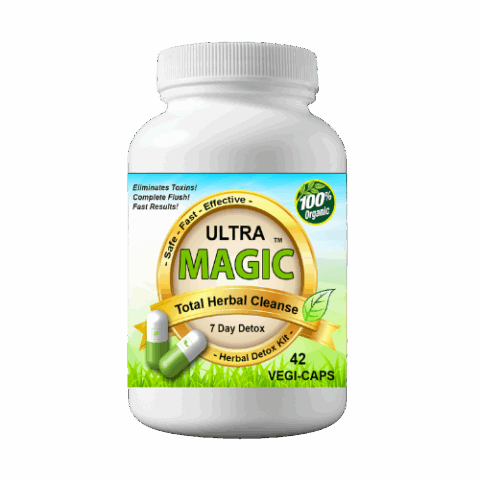
That’s the approach the 7-Day Magic Detox Kit is built around. It’s a 7-day program using 7 USDA Organic herbs — burdock, dandelion, rhubarb, goldenseal, sheep sorrel, cat’s claw bark, and pau d’arco — that have been used in herbal cleansing protocols for decades. One bottle, one week, and your body is doing the work.
Want to understand how a real herbal detox actually works? Read: The 15 Best Ways to Detox Your Body or Does Magic Detox Actually Work?
Frequently Asked Questions
Sources & Further Reading
- SAMHSA. Urine Specimen Collection Handbook for Federal Agency Workplace Drug Testing Programs. Effective February 1, 2024. samhsa.gov
- SAMHSA. Medical Review Officer Guidance Manual for Federal Workplace Drug Testing Programs. 2024. samhsa.gov
- Quest Diagnostics. Workforce Drug Test Cheating Surged in 2023, Finds Quest Diagnostics Drug Testing Index Analysis of Nearly 10 Million Drug Tests. May 15, 2024. newsroom.questdiagnostics.com
- National Institute on Drug Abuse (NIDA). Drug Testing. National Institutes of Health. nida.nih.gov
Skip the Risk. Get Actually Clean.
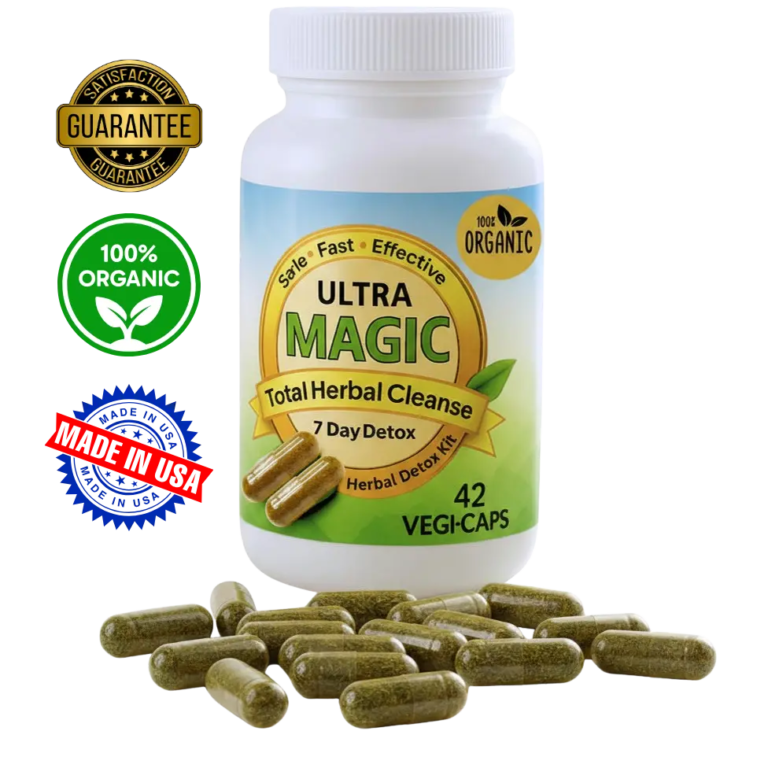
The 7-Day Ultra Magic Detox Kit uses 7 USDA Organic herbs to help your body flush THC permanently. 700,000+ customers since 2007. Ships the same day you order (by 2 PM ET).
$57.95 $49.26 with code DETOX · 60-day money-back guarantee